

Welcome to the Casa Community
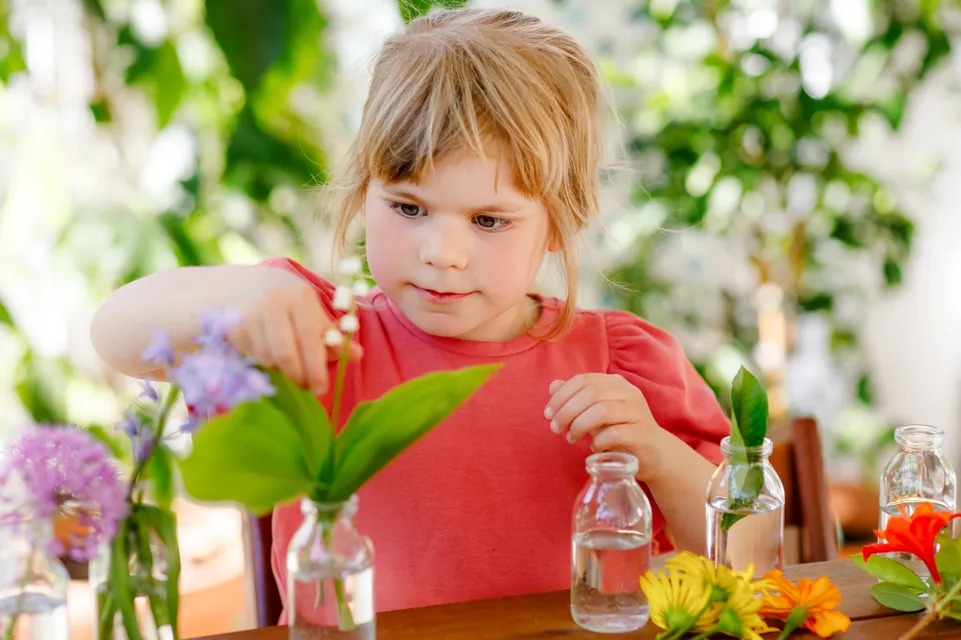
The classroom environment itself encourages independence and care. Everything is sized for children and thoughtfully arranged, inviting responsibility and mindful use. Children learn they are capable of caring for themselves, their work, and their community. These daily experiences nurture resilience, self-confidence and a deep satisfaction in meaningful work.
At SOL, the Casa Community reflects our commitment to educating the whole child, mind, body, and spirit. We cultivate independence, curiosity, compassion, and confidence within an environment rooted in love, respect, and purpose. As children move through their three-year Children’s House journey, they develop not only strong academic foundations, but also the social-emotional awareness, self-discipline, and joyful relationship with learning that will guide them throughout life.
Casa Community Program Options
Sensorial
Awakening Awareness and Refining Perception Through the Senses
The Senses as a Path to Understanding
The Sensorial area of the Casa Community offers children daily opportunities to engage the world with attentiveness and care. During early childhood, the senses are the child’s primary path to understanding, and this curriculum supports the natural human desire to bring clarity, order, and meaning to lived experience.
Precision Through Intentional Design
Montessori sensorial materials are intentionally designed to highlight one quality at a time, such as color, size, shape, texture, weight, sound, scent, or taste, allowing children to notice distinctions with increasing precision. Through matching, grading, and ordering, children organize their sensory impressions and develop careful observation and discernment. Repetition is welcomed, as each return to the material deepens perception and understanding.
Cultivating Deep Focus and Patience
As children engage with these materials, their ability to focus deepens. Repeated exploration encourages careful movement, patience, and thoughtful attention, supporting a growing capacity to remain engaged with a task from beginning to end.
Foundations for Academic Frameworks
Sensorial experiences also form an essential foundation for future academic learning. By classifying and ordering what they perceive, children build the mental frameworks that support mathematics, language, science, and artistic expression. As vocabulary expands, children gain the words to describe their world with greater accuracy and confidence.
Developing Sensitivity to Beauty and Order
At SOL, Sensorial is understood as a practice of awareness and appreciation. As children learn to see more carefully and listen more closely, they develop sensitivity to beauty, balance, and order in their environment. These experiences support not only intellectual growth, but also the child’s inner life, cultivating curiosity, discernment, and a thoughtful relationship with the world around them.
Clarity, Confidence, and Wonder
Through Sensorial work, children develop clarity of perception, patience, and concentration, qualities that prepare them to engage learning and life with care, confidence, and a deep sense of wonder.
Language
Finding Voice, Meaning and Connection Through Communication
The Foundation of Spoken Language and Virtue
Spoken language forms the foundation of all literacy and communication. Through conversation, storytelling, songs, poetry, and precise vocabulary across the curriculum, children continually refine their ability to express ideas clearly and listen with understanding. Language is also supported through SOL’s conscious focus on moral empowerment through which children are introduced to the language of the virtues, helping them understand and speak thoughtfully about values such as kindness, respect, patience, and responsibility.
A Multisensory Transition to Writing
As spoken language develops, children are introduced to written language through a carefully sequenced, multisensory approach. Children learn the sounds of letters before their names, building a strong connection between sound and symbol. Writing is introduced before reading, allowing children to express their own thoughts and ideas using materials such as the movable alphabet, even before their hands are ready for sustained pencil work.
The Natural Emergence of Reading and Grammar
Reading emerges naturally in the Casa Community as children begin to recognize the words they have written. Children progress from phonetic reading to more complex language patterns, always with an emphasis on comprehension and meaning. As language skills mature, children explore grammar, word study, and creative expression, strengthening clarity of thought and confidence in communication.
Bilingual Immersion and Cultural Appreciation
Language learning at SOL is enriched through a bilingual environment. Children are immersed in both Spanish and English through songs, stories, conversations, and daily routines, allowing listening and speaking skills to develop in both languages with ease. Children may also explore reading and writing in one or both languages, supported according to interest and readiness, while gaining appreciation for diverse cultures and perspectives. At SOL, children learn to communicate in ways that foster shared understanding and honor diversity.
Mathematics
Building Understanding Through Order, Pattern, and Discovery
The Foundation of Number Sense
Children begin by developing a deep understanding of numbers from zero through ten. Through carefully designed materials, they explore quantity, symbol, and sequence, forming a clear and grounded sense of how numbers relate to one another. This early work establishes a strong foundation of number sense rooted in experience rather than memorization.
Visualizing Place Value and Teens
As understanding grows, children are introduced to the language and structure of the teens and tens, extending their comprehension beyond ten and preparing them for work with larger numbers. Concrete materials make place value visible and tangible, allowing children to build, compare, and manipulate quantities with confidence.
Exploring the Decimal System
Work with the decimal system further expands this understanding. Children explore the base-ten structure of mathematics by working with units, tens, hundreds, and thousands, often constructing and deconstructing large numbers. Through this process, children come to see mathematics as an ordered and logical system that can be explored thoughtfully and with confidence.
Fluency and Operations through Understanding
As children gain familiarity with quantity and operations, they are offered opportunities to practice and internalize basic math facts. Memorization materials provide a supportive, fun and engaging way to build fluency in addition, subtraction, multiplication, and division, always grounded in understanding and free from pressure.
Cultural Studies
Unity, Diversity, and the Human Family
A Physical Foundation for Global Geography
Children are introduced to the wider world through concrete, hands-on materials that make global learning accessible and meaningful. Globes and puzzle maps allow children to explore the shape of the Earth, the names and locations of continents and countries, and the relationships between land and water. These materials offer a physical foundation for understanding geography and spark curiosity about people and places beyond their immediate surroundings.
Cultivating Empathy Through Cultural Learning
Cultural learning is enriched through stories, images, artifacts, music, and food that reflect the traditions and daily lives of people around the world. Children explore how people live, celebrate, create, and care for one another across cultures, developing attitudes of respect and admiration rather than fear or judgment. Through growing familiarity and lived experience, children come to see differences as enriching rather than dividing, laying the foundation for global citizenship rooted in empathy, respect, and freedom from prejudice.
Expression and Connection Through the Arts
Art and music provide powerful avenues for cultural expression and connection. Children explore a variety of artistic media, such as watercolor, drawing, sewing, and other creative works, as well as music from different traditions. These experiences encourage self-expression while also fostering an appreciation for beauty, creativity, and meaning across cultures.
Interdependence and the Natural World
Cultural studies also integrate knowledge of the natural world, including plants, animals, habitats, and landforms, helping children understand how people everywhere are connected to and dependent upon the Earth’s resources. Caring for classroom plants and observing living creatures reinforces respect for life and deepens children’s understanding of interdependence.
A Holistic Approach to Peace and Unity
At SOL, cultural studies are not taught as isolated facts, but as a holistic way of understanding life and belonging. By learning about people, places, traditions, and environments with care and intention, children develop empathy, curiosity, and a sense of responsibility toward others. These early experiences support the growth of inclusive perspectives and help lay the groundwork for a more peaceful and unified world.
Recognizing Our Shared Human Family
Through cultural exploration, children come to recognize both the richness of our differences and the deep connections that unite us as members of one human family.
Encountering the
Natural World
Scientific Exploration, Discovery and Stewardship
Direct Interaction and the Art of Observation
Exploration is rooted in direct interaction with materials and the environment. Children observe changes in matter and explore life cycles through activities such as planting seeds, caring for living things, and noticing seasonal change. These experiences invite children to slow down, look closely, and develop thoughtful attention and reverence for the natural world.
Tools for Inquiry and Reflection
Simple tools support this work. Magnifying glasses, measuring cups, scales, and other materials help children observe details, compare quantities, and explore physical properties with intention. Through guided experimentation and open-ended exploration, children practice asking questions, making predictions, and reflecting on what they observe, building habits of reflection and inquiry that serve them throughout life.
The Outdoor Classroom and Gross Motor Discovery
The outdoor environment serves as a natural extension of the classroom. Daily time outdoors allows children to move freely, engage their senses, and explore the living world through nature walks, open-ended play, and purposeful activity. Running, climbing, balancing, digging, and cooperative games support physical coordination, resilience, and confidence, while also fostering cooperation and empathy.
Gardening and the Cycle of Interdependence
Gardening is a meaningful part of children’s experience with the natural world. Each classroom tends garden spaces where children plant, water, weed, harvest, and observe growth over time. Caring for plants, composting, observing insects, and returning living creatures gently to their habitats helps children understand interdependence and develop respect for all forms of life.
Science Integrated into Daily Life
Science is also woven naturally into daily classroom routines. Cooking activities offer opportunities to explore change and transformation through familiar, carefully supervised experiences, while caring for classroom plants and animals introduces children to ecosystems, growth, and responsibility. These integrated experiences help children see that scientific understanding is closely connected to everyday life and thoughtful care of the environment.
Discovery as a Pathway to Stewardship
At SOL, encountering the natural world nurtures both discovery and stewardship. Children are encouraged to approach exploration with curiosity, respect, and responsibility. Through these experiences, children develop early problem-solving skills, critical thinking, and a growing sense of care for the earth.
Attentiveness, Humility, and Connection
Through exploration of the natural world, children learn not only about how things work, but also how to relate to life with attentiveness, humility, and care, recognizing themselves as capable participants within a larger, interconnected world.
Art & Music
Creativity, Expression, and Exploration
The Creative Foundation of the Prepared Environment
The Montessori environment is intentionally designed to support creative development. Emphasis on independence, freedom within clear boundaries, intrinsic motivation, and unhurried time allows children to engage deeply in their work. In art and music, children experience a sense of ownership over their creative process, learning to develop their ideas, solve problems, and express themselves with confidence. Collaboration and focused concentration emerge naturally as children work alongside one another, inspired by the beauty, order and meaningful possibilities of the prepared environment.
Skill Building and Artistic Integration
Art experiences in the Children’s House build gradually from simple to more complex skills. Children learn to use real tools with care, such as scissors, paintbrushes, glue, and handwork materials, developing coordination, patience, and confidence. These foundational skills extend across the curriculum as children paint maps, illustrate stories, design geometric patterns, and create scientific drawings. Through this integration, children come to see art as a natural part of learning and daily life.
Process-Oriented Exploration and Autonomy
Art materials are thoughtfully displayed on accessible shelves, offering both simple, open-ended invitations and longer, multi-step projects. Once lessons have been given, children are free to return to these materials independently, allowing them to practice skills, refine techniques, and explore ideas at their own pace. The emphasis remains on exploration and process rather than on producing a particular outcome. Art materials are available to children each day, inviting spontaneous exploration and ongoing engagement with creative work as part of the classroom rhythm.
Music as a Living Classroom Rhythm
Music is equally woven into the daily life of the Casa Community. Early childhood is a particularly receptive time for musical development, and children engage with music through singing, movement, rhythm games, and listening experiences. Songs are chosen for both their musical qualities and their uplifting meaning, supporting joy, harmony, and expressive confidence.
The Montessori Bells and Auditory Training
In the Children’s House, children explore pitch and tone through the Montessori Bells, a carefully designed material that isolates sound and trains the ear through matching and grading activities. This sensorial approach deepens musical awareness and supports attentive listening. Children also work with rhythm instruments, clapping games, and movement activities that help them internalize pattern, timing, and flow.
Refining the Spirit Through Beauty
At SOL, art and music are also understood as gifts that uplift and refine the spirit. Creative expression offers children a way to give form to inner ideas and feelings, while music provides a pathway toward balance, joy, and emotional harmony. Through these experiences, children encounter beauty as something that inspires, elevates, and connects them to what is good and meaningful.
Discovery and Confidence in Expression
Through art and music, children experience creativity as a way of exploring, expressing, and discovering meaning, supporting joy, harmony, and confidence in creative expression.
Readiness for the Casa Community
Supporting a Confident and Successful Transition
Physical Independence
Children entering the Casa Community are able to:
· Use the restroom independently.
· Dress and undress themselves with little or no assistance.
· Wash and dry their hands independently.
To protect privacy and autonomy, Children’s House students do not wear diapers. Toilet independence requires a child to recognize their needs, manage clothing, and complete the routine independently, ensuring they move through the day with confidence.
Communication and Adaptability
Children demonstrate readiness when they are able to:
· Communicate basic needs and feelings.
· Follow simple directions.
· Adapt to the gentle rhythms and routines of the classroom.
Clear communication helps children feel understood and supported, while familiarity with simple routines allows them to settle into the day with confidence and ease.
Interest in Work and Learning
A child who is ready for the Casa Community:
· Shows curiosity and interest in classroom activities.
· Is open to being introduced to new lessons.
· Can concentrate for an age-appropriate length of time.
· Is willing to accept gentle guidance and redirection from the Montessori guides.
These qualities support a child’s ability to engage meaningfully with the prepared environment and to grow in independence and focus.
Social and Emotional Maturity
Emotional readiness is equally important. Children entering the Casa Community are able to:
· Transition between activities with growing confidence.
· Interact respectfully with peers and adults.
· Show emerging awareness of others and their needs.
These skills support a harmonious classroom community and help children build trusting relationships as they begin their three-year journey in the Children’s House.
Encouraging Participation in Daily Life
Children are invited into the real work of the day, caring for their bodies, their environment, and their community. These experiences build capability, responsibility, and trust in their growing abilities.
Supporting Movement, Exploration, & Discovery
Thoughtfully prepared spaces allow children to move freely, choose activities, and explore with curiosity, supporting physical development, concentration, and a sense of wonder.
Schedule and Daily Rhythm
of the Casa Community
Consistency, Balance, and Respect for the Child
Morning Arrival
8:45-9h
Children arrive gradually and are welcomed into the classroom. They wash their hands, put away belongings, and settle into the environment at their own pace, preparing for the morning work cycle.
Morning Montessori Work Cycle
9-12h
The heart of the Casa day is a three-hour uninterrupted work period. During this time, children choose work from across the curriculum, receive individual or small-group lessons from the Guide, work independently, observe others, and enjoy a healthy snack as part of the classroom routine.
This extended period allows children to develop concentration, independence, and deep engagement with their work, hallmarks of authentic Montessori education.
Outdoor Play
12-12:30h
Following the morning work cycle, children transition outdoors for play and exploration. Time outside is offered daily, weather permitting, and includes free movement, imaginative play, and social connection.
Half-Day Departure
12:30h
Children enrolled in the half-day program are dismissed before lunch.
Lunch
12:30-13:15h
Lunch follows in a calm, communal setting, encouraging independence, responsibility, and social grace.
Rest or Extended Day Work Cycle
13:15-15:15h
In the afternoon, children’s individual needs are honored.
Children who benefit from rest are offered a quiet nap period with stories, soft music, and a peaceful atmosphere.
Older children who no longer nap engage in a second work cycle, receiving more advanced lessons, participating in small-group work, creative expression, music, movement, or nature-based exploration.
This time supports both restoration and continued learning, depending on each child’s readiness.
Full-Day Departure
15:15h
Children enrolled in the full-day program are dismissed.
After-School Care (Optional)
15:15-17h
After-school care offers a relaxed continuation of the day, with individual and small-group activities such as art, cooking, science exploration, and outdoor play.